Year 8 · English · Speeches and rhetoric · Lesson 3
Writing your own speech
How to plan and write a persuasive speech: hooks, arguments, counter-arguments and rebuttals, and a call to action, with a model speech.
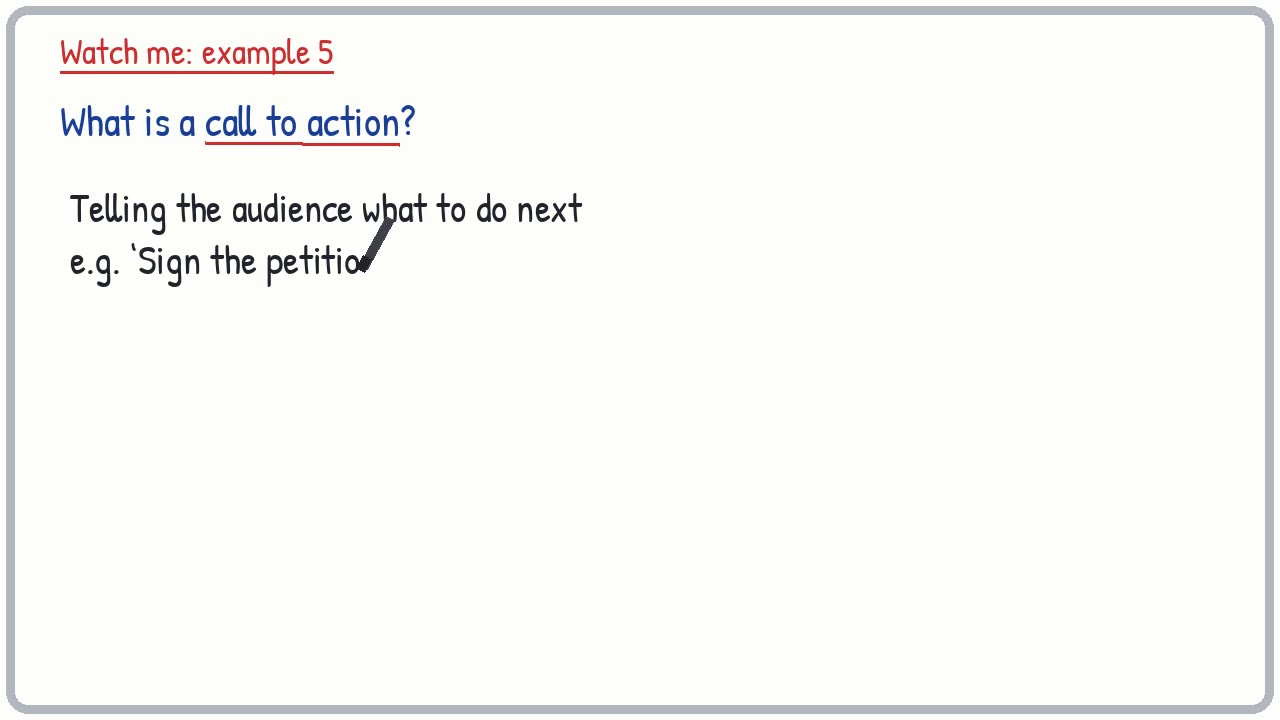
20-minute video lesson
Teaching, worked examples and 20 practice questions solved step by step.
Watch free for a monthWhat your child will learn
- Plan a speech in six parts
- Write an effective hook
- Write a counter-argument and rebuttal
- End with a call to action
- Use rhetorical devices
The method
- Plan the six parts.
- Open with a hook.
- Use AFOREST and ethos, pathos, logos.
- End with a call to action.
Key words: hook, counter-argument, rebuttal, call to action, audience, tone, direct address.
Worked examples
The first three practice questions from the lesson, with every step.
Question 1
What should a speech's first sentence do?
- Step 1: Grab attention: a hook
Answer: Grab attention (a hook)
Question 2
Why include three main arguments?
- Step 1: Enough to convince
- Step 2: Easy to remember (rule of three)
Answer: Enough to convince, and easy to remember
Question 3
What should each argument paragraph include?
- Step 1: A clear point
- Step 2: Evidence: a fact, statistic, or example
- Step 3: Explain why it matters
Answer: A point, evidence, and explanation