Year 8 · English · War poetry · Lesson 1
Patriotism and propaganda
War poetry context: patriotism and propaganda in Rupert Brooke's ‘The Soldier’ and Jessie Pope's ‘Who's for the Game?’.
20-minute video lesson
Teaching, worked examples and 20 practice questions solved step by step.
Watch free for a monthWhat your child will learn
- Explain the context of 1914
- Define propaganda and patriotism
- Analyse Brooke's ‘The Soldier’
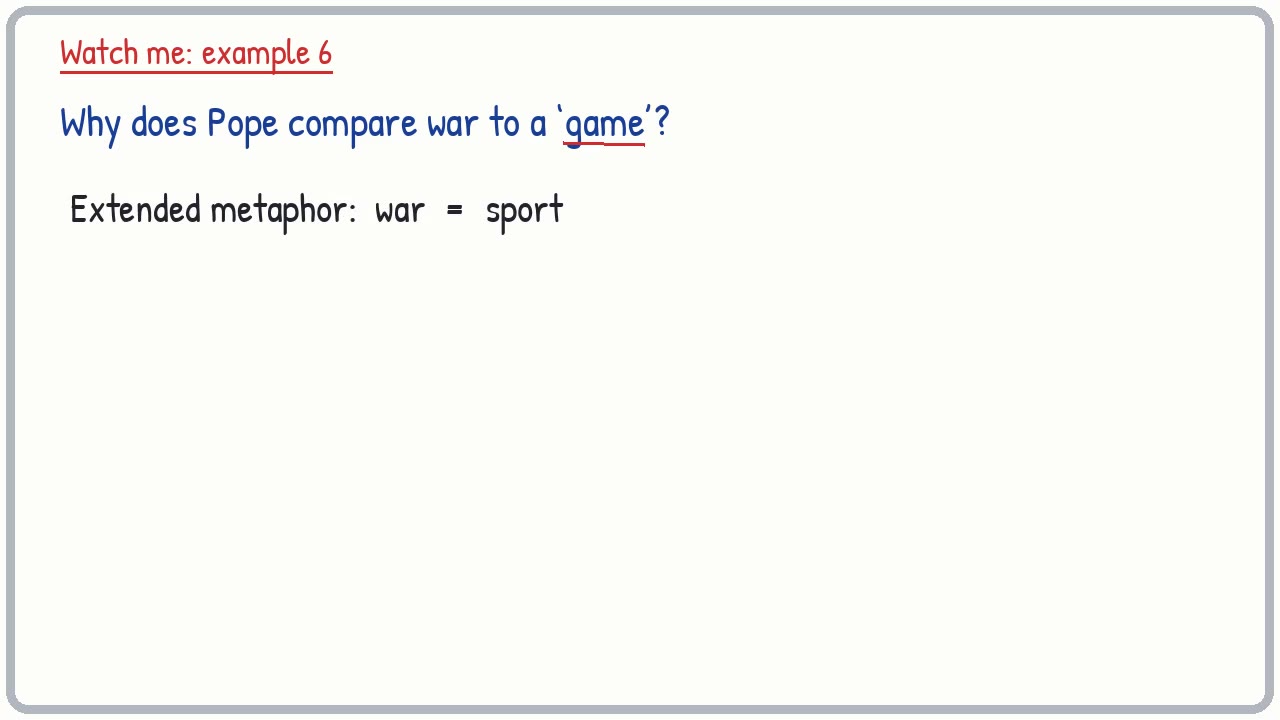
- Analyse Pope's extended metaphor and questions
- Compare the two poems
The method
- Think about context: when and why was it written?
- Pick a short quotation.
- Name the technique.
- Explain the attitude to war.
Key words: propaganda, patriotism, context, extended metaphor, rhetorical question, tone, idealised.
Worked examples
The first three practice questions from the lesson, with every step.
Question 1
When did the First World War start and end?
- Step 1: 1914 to 1918
Answer: 1914 to 1918
Question 2
Who wrote ‘The Soldier’?
- Step 1: Rupert Brooke, 1914
- Step 2: He died in 1915, on the way to battle
Answer: Rupert Brooke
Question 3
What is ‘The Soldier’ about?
- Step 1: A soldier imagines dying abroad
- Step 2: His grave would be ‘for ever England’
Answer: A soldier proudly imagining dying for England