Year 8 · Design and technology · CAD and electronics · Lesson 4
Sensors and designing an electronic product
Sensors (LDR, thermistor, switches), transistors and microcontrollers, and designing an automatic night-light from specification to testing and evaluation.
17-minute video lesson
Teaching, worked examples and 20 practice questions solved step by step.
Watch free for a monthWhat your child will learn
- Explain how LDRs and thermistors work
- Compare transistors and microcontrollers
- Plan a product with a systems diagram
- Write a specification and evaluate against it
The method
- Need + user.
- Specification.
- Plan.
- Make, test, evaluate.
Key words: sensor, LDR, thermistor, transistor, microcontroller, specification, night-light.
Worked examples
The first three practice questions from the lesson, with every step.
Question 1
What does LDR stand for?
- Step 1: Light...
Answer: Light-Dependent Resistor
Question 2
What happens to an LDR's resistance in the dark?
- Step 1: Up or down?
Answer: it increases (goes high)
Question 3
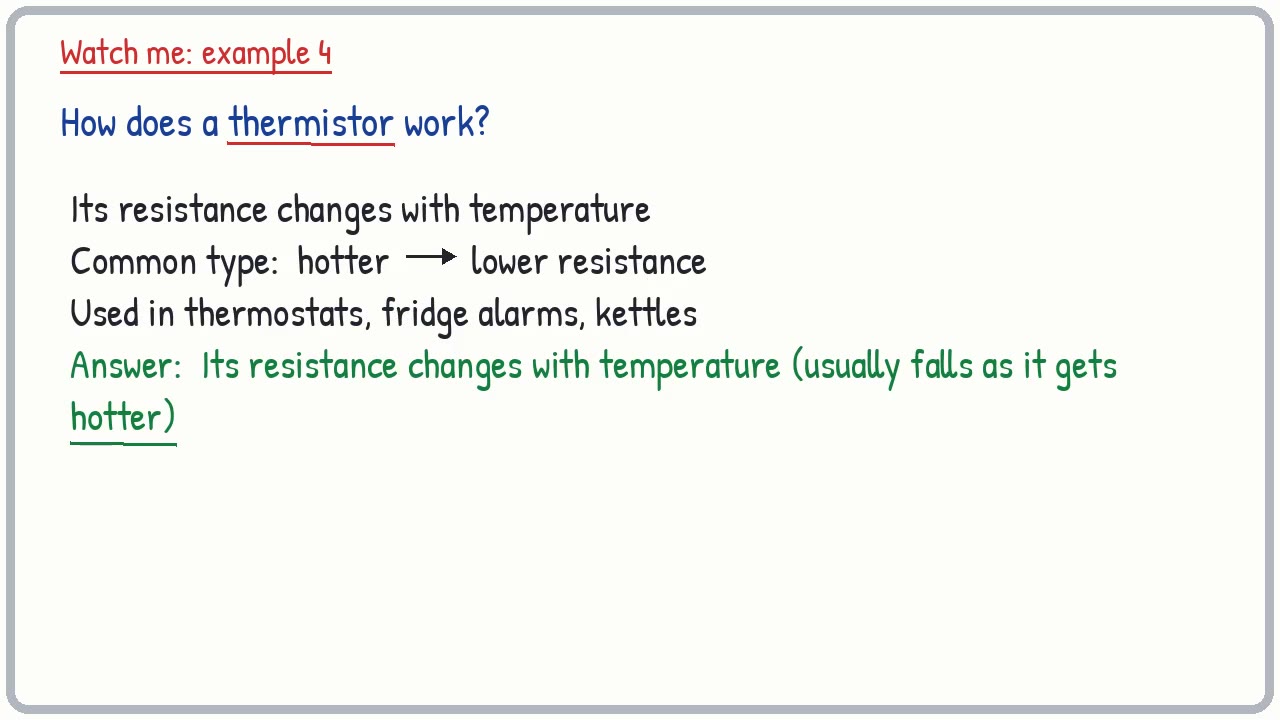
What does a thermistor sense?
- Step 1: Hot or cold
Answer: temperature