Year 8 · Science · Ecosystems and photosynthesis · Lesson 2
Photosynthesis
The word equation for photosynthesis, where it happens, how plants use glucose, what affects the rate, and how it compares with respiration.
24-minute video lesson
Teaching, worked examples and 20 practice questions solved step by step.
Watch free for a monthWhat your child will learn
- Write the word equation for photosynthesis
- Describe the role of chloroplasts and chlorophyll
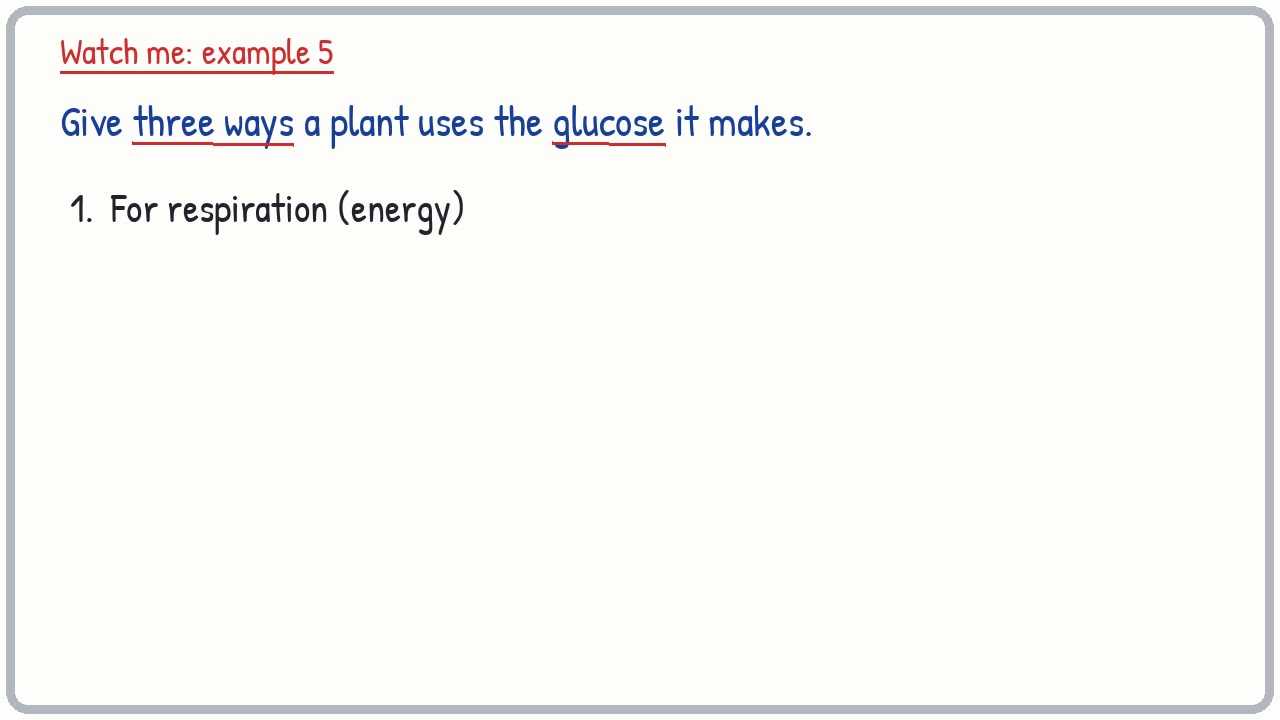
- Describe how plants use glucose
- Describe factors that affect the rate of photosynthesis
- Compare photosynthesis and respiration
The method
- Photosynthesis: carbon dioxide + water → glucose + oxygen, using light absorbed by chlorophyll.
- It happens in chloroplasts in leaf cells.
- Glucose is used for respiration, stored as starch, and used to make cellulose and proteins.
- The rate increases with light, carbon dioxide and temperature (until enzymes denature).
Key words: photosynthesis, chlorophyll, chloroplast, glucose, oxygen, carbon dioxide, light intensity, starch.
Worked examples
The first three practice questions from the lesson, with every step.
Question 1
What are the reactants of photosynthesis?
- Step 1: carbon dioxide + water
Answer: Carbon dioxide and water
Question 2
What are the products of photosynthesis?
- Step 1: glucose + oxygen
Answer: Glucose and oxygen
Question 3
What is chlorophyll, and what does it do?
- Step 1: A green substance in chloroplasts
- Step 2: It absorbs light energy
Answer: The green substance that absorbs light for photosynthesis